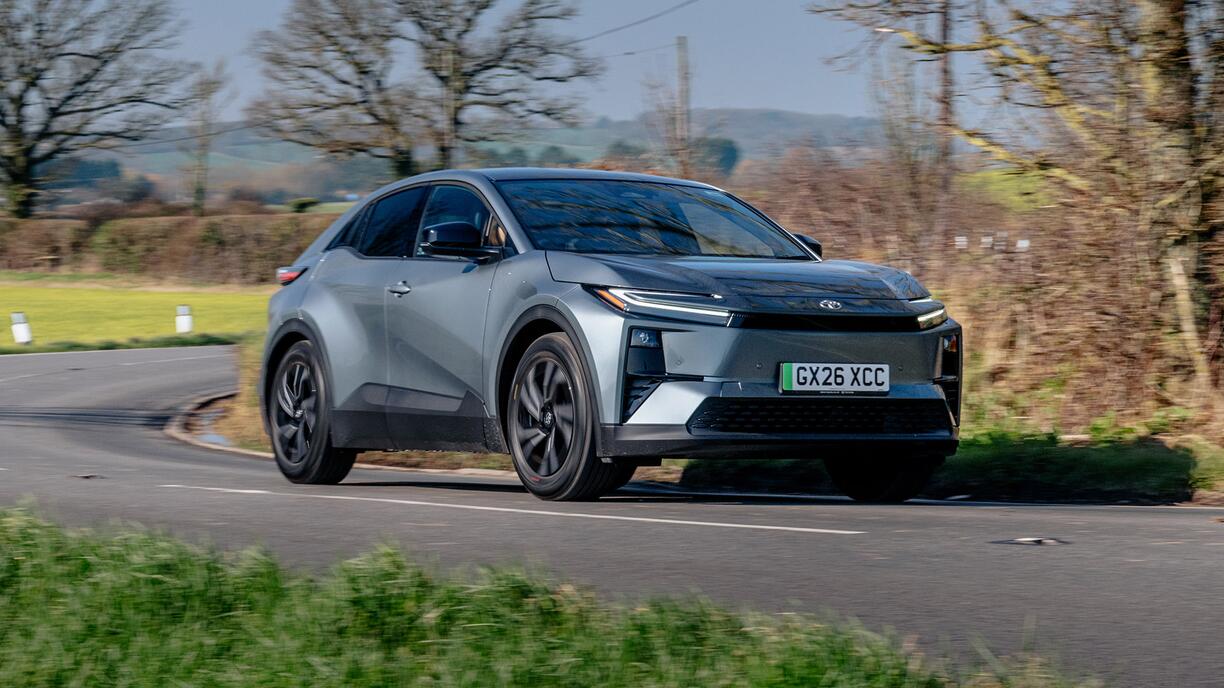
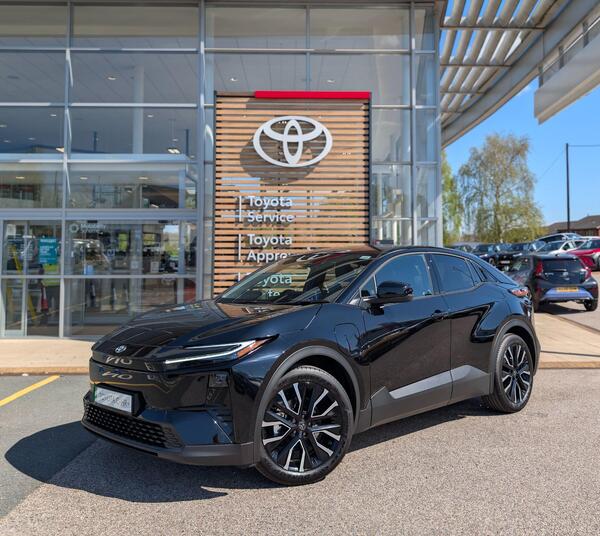
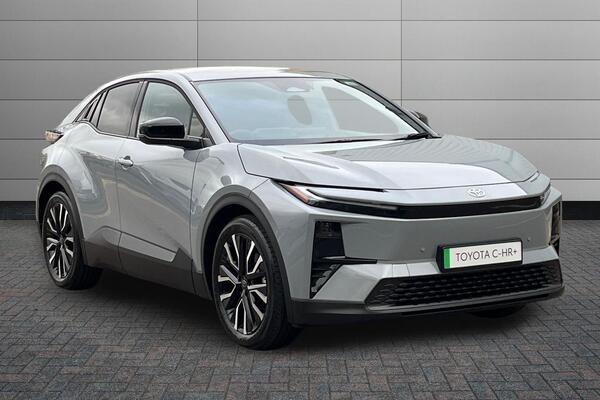
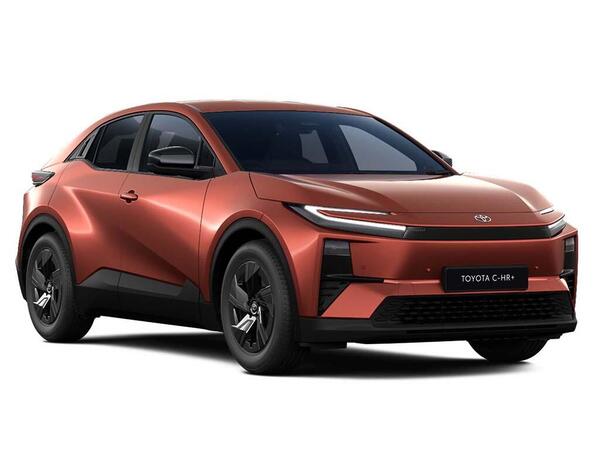
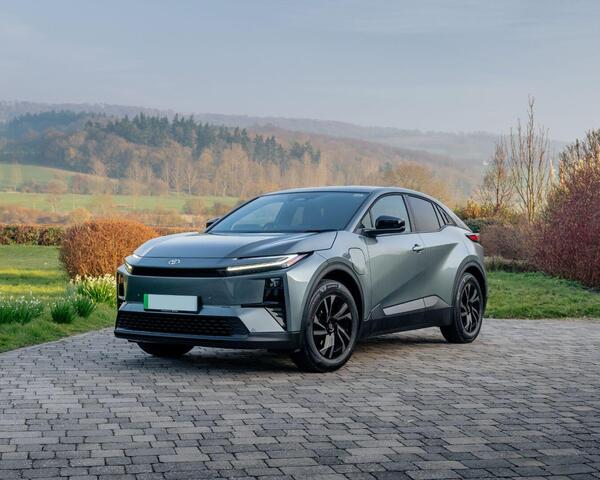
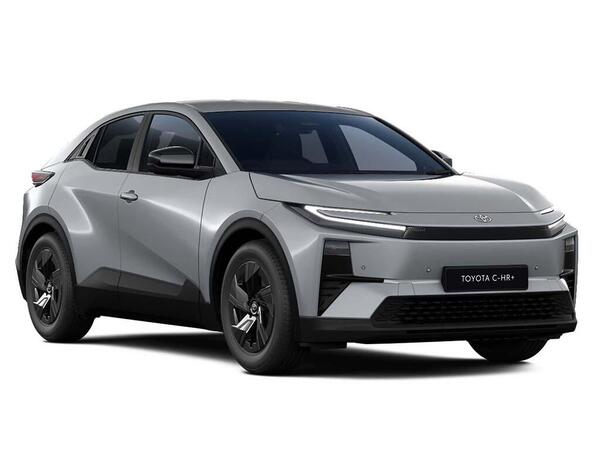
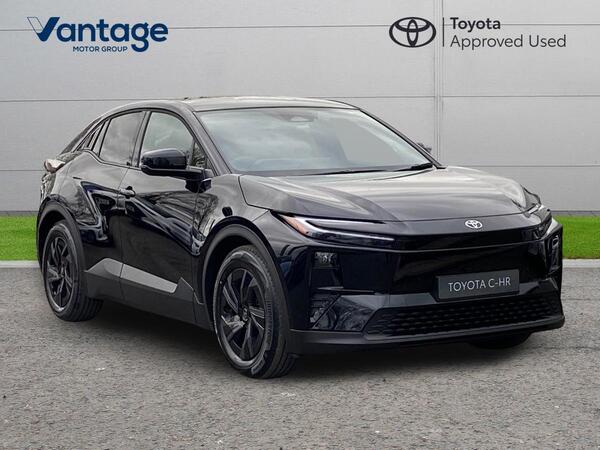
It took Toyota a while to enter the full electric vehicle market with the bZ4X SUV and now it is following up with the next instalment. The C-HR+ slots between the smaller Urban Cruiser and larger bZ4X in Toyota’s electric line-up. It takes on a wide array of rivals including the Ford Explorer, Skoda Enyaq, Mini Electric Countryman and Nissan Leaf to name but a few, but does the C-HR+ drive well enough to back up the temptation of its theoretical 378-mile maximum range?
An efficient battery in a fairly small package is a good start for this car; add in the lower level of Electric Car Grant (£1,500) and you have a relatively green car. Toyota as a brand is not quite so convincing in its talk about addressing climate change: it appears to do what is mandated but not much more, e.g. its target of carbon neutrality for greenhouse gases is still 2050, where others now aim for 2040. Its global water usage reduction target is 3 per cent per vehicle vs 2013 levels; VW Group by comparison has reduced water consumption by 27 per cent per vehicle since 2010. We love the “Recycle my Car” button on the sustainability landing page, though, which is linked to directly from the homepage.
Running costs for a Toyota C-HR+
“All versions of the C-HR+ qualify for the lower level £1,500 government Electric Car Grant”
Toyota has addressed range and efficiency criticisms of its first EV, the bZ4X, by fitting the C-HR+ with battery pre-conditioning and a heat pump as standard. This results in a 10 to 80 per cent charging time of less than half-an-hour at the fastest public rate the Toyota can accept. The C-HR+ can go well over 300 miles to a charge in its long-range format; running one should therefore not break the bank. All versions of the C-HR+ qualify for the lower level £1,500 government Electric Car Grant, plus Toyota is offering some compelling finance deals to make the C-HR+ even more appealing.
Expert rating: 5/5
Reliability of a Toyota C-HR+
“One thing you can almost certainly rely on a Toyota for, and especially an electric Toyota, is impeccable reliability”
One thing you can almost certainly rely on a Toyota for, and especially an electric Toyota, is impeccable reliability. Providing you keep taking the car back to a main dealer for servicing and annual battery health checks, you’ll get a 10-year/100,000-mile warranty on the car itself. Additionally, cover for the battery continues for up to one million kilometres – that’s 650,000 miles. This also lasts for ten years, assuming you don’t miss one of the required 12-monthly check-ups.
Expert rating: 5/5
Safety for a Toyota C-HR+
“We appreciate Toyota’s use of physical dials for temperature and volume controls, though looking at these for even a split second will incur the wrath of the driver attention monitoring system”
All C-HR+ models are packed with all the safety kit you’d expect as standard, plus the really useful stuff like adaptive cruise control, blind-spot monitoring and rear cross traffic alerts which will stop the car if it detects you are about to reverse into oncoming traffic. The latter is particularly handy as the sloped rear roofline does limit your view out of the back. In contrast, thin front pillars and the short bonnet make for excellent forward visibility. We appreciate Toyota’s use of physical dials for temperature and volume controls, though looking at these for even a split second will incur the wrath of the driver attention monitoring system. This is a shame because the rest of the safety aids are mercifully unobtrusive.
Expert rating: 4/5
How comfortable is the Toyota C-HR+
“Probably the biggest strength of the Toyota C-HR+ is how quiet and refined it”
Probably the biggest strength of the Toyota C-HR+ is how quiet and refined it is. Following our initial European test drive of a prototype model fitted with larger wheels, we have now driven the car in the UK on smaller (and more ride-cushioning) standard wheels too. On both occasions were impressed by the fuss-free fashion in which the C-HR+ deals with lumps and bumps – it’s worlds away from Toyota’s smaller EV, the Urban Cruiser, which we’ve been living with on long-term test. We also like the confidence inspiring way the C-HR+ glides around corners and how planted it feels on the road. The boot is a decent size (almost as big as that in the bZ4X) and rear passenger space is above average with plenty of head- and legroom. However, the shape of the rear windows makes it feel a bit gloomy if you’re forced to sit back there for any great length of time.
Expert rating: 5/5
Features of the Toyota C-HR+
“We like the attempt to put key information in your line of sight, though if you move the steering wheel up too far it does get in the way of the display”
The Toyota C-HR+ features a large central touch-screen for the infotainment, and a smaller, high-mounted display for the driver. In traditional Toyota style these are functional rather than flashy and there’s a degree of ‘plonked on as an afterthought’ to the way both are mounted on the dashboard. We like the attempt to put key information in your line of sight, though if you move the steering wheel up too far it does get in the way of the display. However, we are willing to forgive this and the grey-scale interior because you do get plenty of kit as standard including a reversing camera, two wireless phone chargers, CarPlay and Android Auto, heated front seats and a heated steering wheel.
Expert rating: 4/5
Power for a Toyota C-HR+
“The C-HR+ feels light on its feet in the corners and the steering is noticeably weighty, so while it is clearly not a sports car, the C-HR+ is sharper to drive than many of its rivals”
In other markets there’s a dual-motor, all-wheel drive (AWD) C-HR+, however we won’t be getting it here. Instead, all models come with a single-motor and front-wheel drive so you just need to choose between a smaller or larger battery. The entry-level model has a range of up to 284 miles. However, we tried the slightly more powerful longer range C-HR+ which provides smooth and effortless performance and an official range of up to 378 miles (call it around 300 miles in the real world). Despite being a family-size SUV, the C-HR+ feels light on its feet in the corners and the steering is noticeably weighty, so while it is clearly not a sports car, the C-HR+ is sharper to drive than many of its rivals.